


What her skin needs at every age, and why
There is a conversation most of us have had with our skin at some point, usually standing in front of a mirror, trying to understand why what used to work no longer does.
It is not a failure of your routine. It is not the wrong products, or bad luck, or something you have done. It is biology. Skin is a living organ, and like every other system in the body, it changes over time. The cells that regenerated in your twenties at a pace you never had to think about are doing something different now. The proteins that kept your skin firm and supple have been quietly declining for years. The barrier that once held moisture without much effort is asking for more support.
Understanding what is actually happening beneath the surface, the science of how skin ages, what it loses, and what it genuinely needs at each stage of life, is the most useful thing you can do for your complexion. Not chasing the latest ingredient trend. Not starting over every season. Understanding.
This piece is about that understanding.
The science of skin ageing: what is actually happening
Before we talk about each decade of life, it is worth understanding the mechanisms at work. Skin aging is not a single process. It is the compounding effect of several biological changes that begin earlier than most people expect, and accelerate in response to both time and environment.
Collagen and elastin decline. Collagen is the structural protein that gives skin its firmness and density. Elastin is the protein responsible for its ability to spring back. Both are produced by cells called fibroblasts, and both begin to decline from the mid-twenties at a rate of approximately one percent per year. That rate is not dramatic on an annual basis. Over decades, it is significant. The skin that feels different in your forties compared to your twenties has, in part, simply been losing structural protein steadily since your mid-twenties.
Cell turnover slows. In your twenties, skin cells turn over roughly every 28 days. By your fifties, that cycle can extend to 45 to 60 days. This means dead skin cells remain on the surface for longer, which contributes to the dullness, uneven texture, and congestion that becomes more common with age. It also means active ingredients in your skincare take longer to penetrate and act. The skin of a 50-year-old does not absorb or respond the same way as the skin of a 25-year-old, which is one reason why the same routine at different ages can produce very different results.
Hyaluronic acid depletes. Hyaluronic acid is one of the skin's primary moisture-binding molecules, capable of holding up to a thousand times its weight in water. It is produced naturally within the skin, but production declines steadily with age. By the time most people reach their fifties, skin hyaluronic acid levels are a fraction of what they were at twenty. This is a significant driver of the dryness, thinning, and loss of plumpness associated with mature skin.
The skin barrier weakens. Ceramides are the lipid molecules that form the skin's protective barrier, essentially the mortar between the cells. They account for roughly 50 percent of the outer skin layer, the stratum corneum, by lipid composition, and are responsible for the lamellar bilayer structure that controls what enters and leaves the skin. There are twelve identified ceramide subtypes in human skin, each defined by the combination of its sphingoid base and fatty acid chain. Ceramide NP (non-hydroxy fatty acid / phytosphingosine) is one of the most abundant and the most studied in cosmetic formulation. It works alongside cholesterol and free fatty acids in an approximately equal ratio to form the lipid matrix between cells, and it is this matrix, not the cells themselves, that determines whether the barrier holds. When ceramide levels fall, the lamellar structure becomes disorganised, gaps form in the matrix, and the skin's ability to retain moisture and exclude irritants drops accordingly. The skin that feels tight after cleansing, that reddens easily, that dehydrates despite regular moisturising, is typically skin whose ceramide ratio has shifted enough that the barrier can no longer function efficiently. Topical ceramides in cosmetically calibrated formulations integrate into the existing lipid structure and help restore the ratio, giving the skin the structural component it is no longer synthesising at the rate it once did.
Peptides signal renewal. Peptides are short chains of amino acids, the building blocks of proteins including collagen and elastin. In skin science, they fall into four broad functional categories, each working through a different mechanism. Signal peptides stimulate fibroblasts to produce more collagen, elastin, and hyaluronic acid, essentially telling the skin to increase its own production of structural proteins. Carrier peptides deliver trace elements such as copper and manganese to enzyme systems that require them for collagen synthesis and wound repair. Enzyme-inhibiting peptides work by blocking the enzymes, including matrix metalloproteinases, that break down existing collagen in the skin. And neurotransmitter-inhibiting peptides target the signals that cause repeated muscle contraction, the mechanism behind expression lines. Tetrapeptides are a subclass of signal peptides composed of four amino acid units. ChroNOline, a caprooyl tetrapeptide-3, works specifically through the skin's chronobiological system, activating the Period 1 clock gene that regulates the skin's circadian repair cycle. Skin does most of its cellular renewal and repair during sleep, and ChroNOline is designed to synchronise with and amplify that natural repair window, prompting more active collagen production and cell renewal through the same biological pathway the skin already uses. It is not overriding a process but reinforcing one.
Oestrogen falls. For women, the hormonal shifts of perimenopause and menopause represent perhaps the most concentrated period of skin change in adult life. Oestrogen plays a significant role in collagen production, moisture retention, and skin thickness. Its decline, which typically begins in the mid to late forties, can accelerate changes that have been building slowly for years. Many women find that their skin changes more noticeably in a two or three-year window around menopause than it did in the entire previous decade.
Extrinsic ageing compounds intrinsic ageing. The processes above are intrinsic, driven by biology and time. But extrinsic factors, most significantly UV exposure and oxidative stress from pollution and environmental toxins, layer on top of them. UV radiation breaks down collagen, triggers pigmentation, and generates free radicals that damage skin cells at a cellular level. The cumulative effect of sun exposure across decades is one of the most significant drivers of visible skin ageing, which is why antioxidant protection is not a luxury ingredient category but a fundamental one.
None of this is cause for alarm. It is simply how skin works. And knowing how it works is the starting point for making genuinely informed decisions about how to support it.
Your twenties: the foundation decade
What is happening in your skin
The twenties are the decade when most people are least concerned about skincare, which is understandable. Skin in this stage is typically at its most resilient: cell turnover is fast, collagen production is near its peak, and the barrier tends to be robust. Breakouts and oiliness are the more common concerns in early adulthood, driven by hormonal fluctuation rather than any structural decline.
But this is also when the groundwork for long-term skin health is laid. Collagen degradation has already begun, quietly. UV damage accumulated in your twenties does not disappear. It compounds. The habits and protections established in this decade have a disproportionate influence on how skin looks and behaves in subsequent ones.
The most useful mindset for skincare in your twenties is not correction, but prevention and education. Learning what your skin actually responds to. Establishing consistency. And beginning the antioxidant protection that will pay dividends for years.
What skin needs at this stage
Vitamin C and antioxidant protection. Free radical damage from UV and environmental exposure is one of the most significant drivers of premature skin ageing, and the time to begin addressing it is before the visible signs appear. Vitamin C, in its active form as L-ascorbic acid, works through three distinct mechanisms simultaneously. As an antioxidant, it donates electrons to unstable free radical molecules, neutralising them before they can damage DNA, lipid membranes, and collagen fibres in the skin. As a melanin inhibitor, it suppresses the enzyme tyrosinase, which catalyses the conversion of tyrosine to melanin, reducing the overproduction that leads to pigmentation and uneven tone. And as a cofactor for collagen synthesis, it is essential to the hydroxylation of proline and lysine, the chemical process through which collagen fibres are stabilised and cross-linked into the durable structures that give skin its firmness. Without adequate Vitamin C, the collagen the body produces is structurally weaker and breaks down faster.
Kakadu Plum delivers Vitamin C at up to 5,300mg per 100 grams, roughly 50 times the concentration found in an orange, alongside ellagic acid and gallic acid. Ellagic acid independently inhibits tyrosinase through a different binding mechanism to Vitamin C, providing dual-pathway pigmentation control. Gallic acid contributes broad-spectrum antioxidant activity and has demonstrated anti-inflammatory properties in dermatological research. The synergy of these three compounds in a whole-plant extract produces a more complete antioxidant and brightening effect than isolated ascorbic acid alone, which is why the source of Vitamin C in a formulation is as important as its presence.
Gentle acid exfoliation. Skin in the twenties turns over efficiently, but that process benefits from support. Alpha-hydroxy acids are water-soluble acids derived from natural sources, each with a distinct molecular size and depth of action. Glycolic acid, derived from sugar cane, has the smallest molecular structure of the AHAs and penetrates most deeply, making it highly effective but also the most likely to cause sensitivity. Lactic acid, derived from milk sugar, has a larger molecule, a gentler action, and the added benefit of hygroscopic properties, meaning it attracts and binds moisture to the skin as it exfoliates. Malic acid from fruit and citric acid from citrus work at the surface level, contributing to the overall acid pH environment that loosens the corneodesmosomes, the protein bonds between dead skin cells, and accelerates desquamation, the natural shedding process. Enzyme exfoliants from papaya (papain) and pineapple (bromelain) work differently again: as proteolytic enzymes, they digest keratin proteins in dead skin cells without altering the skin's pH, making them particularly well suited to sensitive or reactive skin. For the twenties, lactic acid and enzyme-based formulations provide effective, regular exfoliation without the barrier disruption that more aggressive acids can cause at higher concentrations.
Balanced hydration. Even oily skin is often dehydrated skin, and the two are not the same. Oiliness is a sebum response; dehydration is a lack of water content in the skin. Hyaluronic acid exists naturally in the skin's dermis and is one of its primary moisture-binding molecules, capable of holding up to one thousand times its own weight in water. In topical formulation, molecular weight determines where and how it acts. High molecular weight hyaluronic acid, above 1 million Daltons, remains on the skin's surface, forming a film that reduces transepidermal water loss and provides immediate plumping. Low molecular weight hyaluronic acid, below 50,000 Daltons, penetrates into the epidermis and draws moisture from deeper skin layers upward. Sodium hyaluronate, the sodium salt form of hyaluronic acid, has a smaller molecular size than the standard form, penetrates more effectively, and is the format most commonly used in high-performance cosmetic formulation. A moisturiser that uses hyaluronic acid across multiple molecular weights addresses hydration at the surface, within the epidermis, and at the boundary with the dermis simultaneously.
Niacinamide. Vitamin B3, or niacinamide, is one of the most comprehensively researched ingredients in contemporary cosmetic science, with peer-reviewed evidence supporting multiple distinct mechanisms of action. Unlike Vitamin C, which inhibits the enzyme that produces melanin, niacinamide works at a later stage in the pigmentation process: it inhibits the transfer of melanosomes, the organelles that carry melanin, from the melanocytes that produce it to the surrounding keratinocytes that distribute it across the skin surface. This is why it addresses pigmentation without affecting melanin production itself, making it safe and effective across a broad range of skin tones. Niacinamide also increases the skin's synthesis of ceramides and other key lipids, directly supporting barrier function and reducing transepidermal water loss (the passive evaporation of water through the skin). At concentrations of four percent and above, it has demonstrated clinically measurable reductions in sebum excretion rate, which is the mechanism behind its pore-minimising and oil-regulating effect. It also inhibits inflammatory pathways via the NF-kB signalling system, which accounts for its calming action on reactive and sensitive skin.
Ceramides, from the beginning. It is tempting to think of ceramide replenishment as something for later decades, but establishing barrier integrity early is one of the most intelligent investments you can make in your skin's long-term health. In the stratum corneum, ceramides exist alongside cholesterol and free fatty acids in a lamellar, or layered, lipid structure that fills the spaces between skin cells. This structure is what determines barrier function. When even one component of that ratio is depleted, the lamellar arrangement becomes disordered and permeability increases, which is why conditions like eczema, which are characterised by ceramide deficiency, result in persistently dehydrated and reactive skin regardless of how much moisture is applied. Ceramide NP, the subtype most prevalent in cosmetic formulations including Saya's, is identical in structure to one of the ceramides produced naturally by the skin, which allows it to integrate into the existing lipid matrix rather than sitting on top of it. In the twenties, ceramides are not corrective, they are preventive: maintaining the barrier integrity that will become harder to sustain with each decade that follows.
The Fresh Start ritual
A morning and evening routine for skin in the twenties does not need to be complicated. Consistent cleansing, targeted treatment, and protected hydration are the foundation.
Morning: Cleanse with the Cleansing Gel, which combines Kakadu Plum, Marshmallow Root, and Chamomile to remove impurities without stripping. Follow with Balance Moisture, which delivers Hyaluronic Acid, Ceramides, Argan Oil, and Kakadu Plum in a lightweight, fast-absorbing formula designed for balance and all-day hydration. Finish with SPF.
Evening: Cleanse again to remove the day. Two to three times per week, apply the AHA Micro Exfoliant after cleansing: a blend of Lactic Acid, fruit enzyme complex from Papaya, Pineapple, and Mango, and micro-fine Jojoba Beads that polishes gently and accelerates cell turnover without disrupting the barrier. Follow with Balance Moisture.
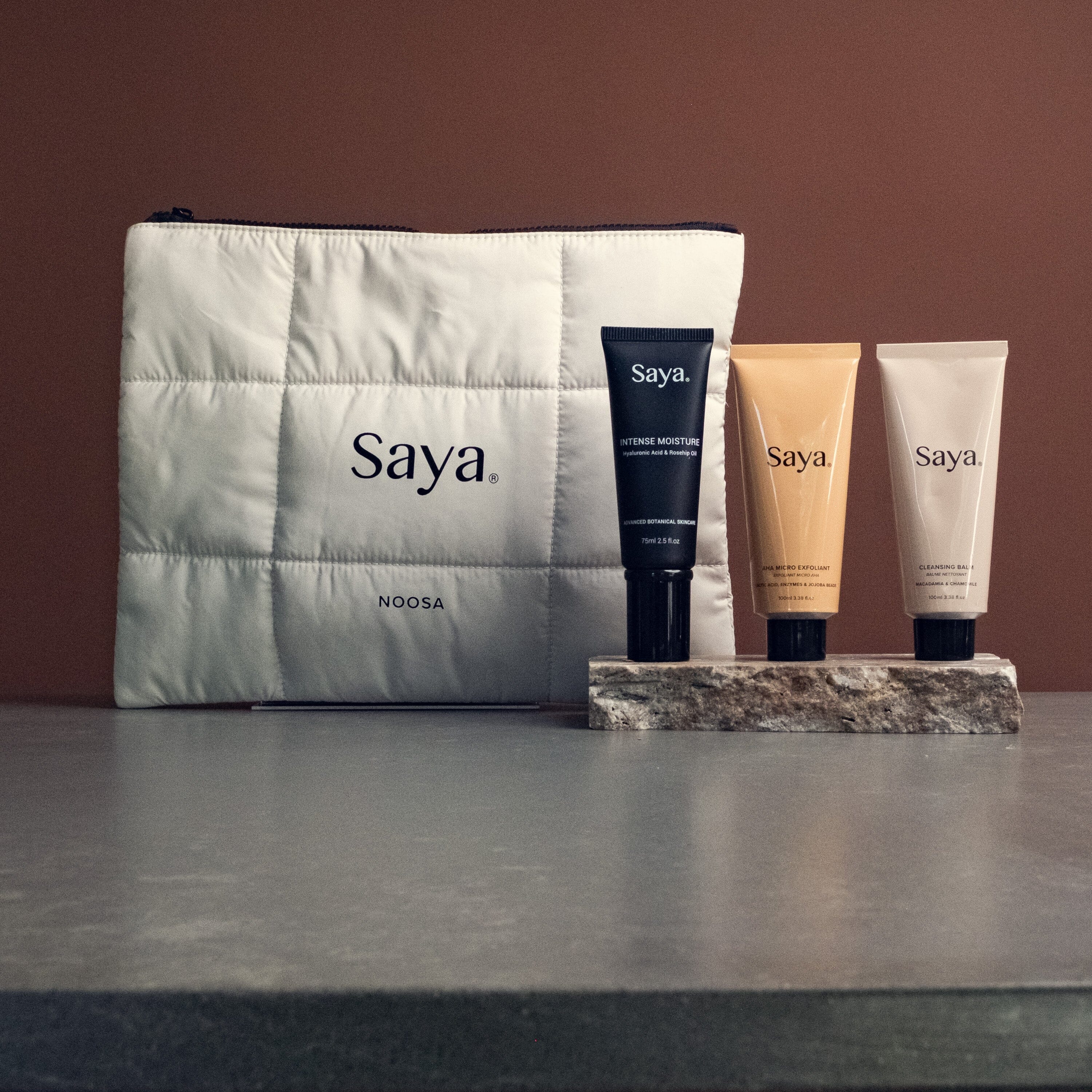
The Fresh Start Bundle brings these three together, along with a Saya beach toiletry bag, containing everything needed to begin a considered routine. Shop the Fresh Start Bundle
Your thirties and forties: the transition years
What is happening in your skin
This is the decade, or more accurately the two-decade period, in which the changes that began quietly in the twenties become perceptible. Collagen loss is measurable and visible. Cell turnover has slowed. The skin that once bounced back readily from a bad night's sleep, dehydration, or a period of stress now takes longer to recover. Fine lines that previously only appeared with expression begin to sit in the skin between expressions. The even tone of youth starts to give way to early pigmentation, typically driven by accumulated UV exposure.
For women in their late thirties and early forties, hormonal fluctuations associated with perimenopause can begin to influence the skin in ways that feel disorienting. The combination of oiliness in some areas, increased dryness in others, and an unpredictable reactivity that was not there before. This is not a single problem. It is several biological processes happening simultaneously.
The skin of this stage needs more active support than the prevention focus of the twenties. It needs ingredients that directly address collagen, hydration, and cellular renewal, and it needs them consistently.
What skin needs at this stage
Niacinamide, more intensively. By the thirties and forties, niacinamide's role in the routine expands significantly. At concentrations of ten percent, which is what the Super Serum delivers, its ability to upregulate ceramide synthesis becomes more pronounced, directly supporting a barrier that is now measurably depleted. Its inhibition of melanosome transfer addresses the pigmentation that has been accumulating through UV exposure across the previous decade or two, gradually evening tone without aggressive intervention. Clinical studies using niacinamide at concentrations of five percent and above have shown statistically significant reductions in fine line depth, improved skin texture, and measurable increases in skin elasticity over 12-week periods, effects attributable to its role in supporting the dermal extracellular matrix. At this concentration it also demonstrates meaningful sebum regulation and anti-inflammatory activity, which is particularly relevant for the hormonal skin fluctuations common in this age group.
Hyaluronic acid, at depth. As the skin's own hyaluronic acid production declines across the thirties and forties, topical replenishment becomes essential rather than supplementary. The most effective formulations use hyaluronic acid across a spectrum of molecular weights to address different layers simultaneously: high molecular weight forms create a surface moisture film, mid-weight forms act within the upper epidermis, and low molecular weight forms, including sodium hyaluronate, penetrate to the epidermis-dermis boundary where they bind water and communicate with deeper skin structures. Pentavitin, a plant-derived saccharide isomerate present in Saya's Intense Moisture formulation, works by a different mechanism: rather than attracting moisture from the environment like hyaluronic acid does, it binds directly to the skin's own keratin proteins, forming a moisture reservoir within the skin that remains stable even in dry environments and is not washed away with water. This makes it particularly effective for skin that loses hydration rapidly or lives in low-humidity climates.
AHAs for resurfacing. With cell turnover now slower, the AHAs in the routine take on a more active role. At this stage, lactic acid's dual action, exfoliating and humectant, makes it the most intelligent choice: it accelerates corneodesmosomes breakdown to shed dead cells while simultaneously drawing moisture into the skin it reveals. The AHA Fruit Complex in Saya's formulation adds citric, malic, and tartaric acids, which work synergistically to maintain the acidic pH environment at the surface that keeps the exfoliation process running efficiently. Enzymatic exfoliants from papain and bromelain provide proteolytic action on keratin proteins without the acid pH mechanism, meaning they can be used by skin that finds straight AHAs irritating. Used consistently two to three times per week, this combination prevents the surface congestion and textural dullness that accumulate when slower cell turnover is left unsupported, and ensures that the actives in serums and moisturisers are reaching the skin, not sitting on a layer of dead cells.
Bakuchiol, as a retinol alternative. Bakuchiol is a meroterpene compound extracted from the seeds of Psoralea corylifolia, a plant used in Ayurvedic and traditional Chinese medicine. Its mechanism of action was not fully understood until relatively recently: it functions as an agonist at retinoid receptors alpha, beta, and gamma, binding to the same receptor subtypes as retinol and activating the same gene expression pathways that regulate cell renewal and collagen synthesis. This is why it produces effects comparable to retinol. What it does not do is undergo the same oxidative conversion process as retinol, which is the mechanism responsible for retinol's photosensitivity and the reactive oxygen species it generates during that conversion. A 2019 clinical study published in the British Journal of Dermatology found that 0.5 percent bakuchiol applied twice daily produced equivalent reductions in fine line depth, skin firmness, and pigmentation to 0.05 percent retinol over 12 weeks, with significantly fewer reported side effects. Its safety profile during pregnancy and breastfeeding, where retinol is contraindicated, makes it a particularly important alternative for women in their thirties and forties. This is the decade to begin it and build the consistent use that produces results over months rather than weeks.
Peptides, for collagen signalling. By the thirties and forties, the skin's fibroblasts, the cells responsible for producing collagen and elastin, are receiving fewer internal signals to maintain their previous rate of production. This is where targeted peptides become one of the most scientifically substantive additions to the routine. The Super Serum contains ChroNOline, the trade name for caprooyl tetrapeptide-3, a signal peptide that operates through the skin's chronobiological system. It activates the Period 1 clock gene, part of the circadian gene network that governs the skin's internal repair schedule. By upregulating this gene, ChroNOline prompts the skin to run its natural overnight renewal cycle more actively, increasing collagen synthesis, accelerating cell turnover, and supporting extracellular matrix production through the biological pathway the skin already uses rather than by imposing an external one. This distinguishes it from more conventional signal peptides, which work through growth factor-like receptor stimulation. ChroNOline works with the skin's own timing system, which is why results tend to compound over consistent, sustained use. It is also worth noting that Dextran, present alongside it in the Super Serum, acts as a carrier compound that stabilises the peptide and supports its penetration through the epidermis, an important detail given that peptides are relatively large molecules that require formulation precision to reach the target depth.
Continued Vitamin C and native botanicals. Antioxidant protection remains critical, and its importance only increases as cumulative UV damage becomes more visible. The brightening and antioxidant work of Kakadu Plum, Burdekin Plum, and Illawarra Plum, a trio that appears across multiple Saya formulations, addresses the pigmentation, dullness, and oxidative stress that characterise skin in this stage.
The Power Years ritual
Morning: The Cleansing Balm is the appropriate upgrade from a gel cleanser at this stage. Its balm-to-milk formula, with Shea Butter, Macadamia Oil, and Kakadu Plum, dissolves impurities thoroughly while conditioning rather than stripping, preserving a barrier that needs more careful management than it did a decade ago. Follow with Intense Moisture, which delivers Hyaluronic Acid, Rosehip Oil, Ceramides, and Edelweiss, a richer and more structured hydration than the Balance Moisture formulated for this level of need. Finish with SPF.
Evening: Cleanse with the Cleansing Balm. Two to three times per week, apply the AHA Micro Exfoliant and allow it to work before rinsing. Follow with Intense Moisture, which provides overnight nourishment and barrier support through the body's peak repair hours.
On alternate evenings, incorporate the Super Serum before moisturising. Its Niacinamide 10%, Hyaluronic Acid, Emu Apple, and the tetrapeptide ChroNOline provide targeted hydration, antioxidant protection, and the peptide signalling that becomes increasingly valuable in this decade. The Renew Serum, a 15-botanical oil-based serum with Bakuchiol and Kakadu Plum, can be used in place of or alongside for targeted antioxidant and renewal support on the skin that needs it most.
The Power Years Bundle brings together the Cleansing Balm, Intense Moisture, and AHA Micro Exfoliant, with a Saya beach toiletry bag. Shop the Power Years Bundle
Your fifties and beyond: the renewal stage
What is happening in your skin
Skin in the fifties is, in many ways, the most honest it has ever been. The cumulative record of decades of UV exposure, environmental stress, hormonal fluctuation, and biological decline is visible on the surface in a way it simply was not before. But this is not the end of a conversation between you and your skin. It is a new one that requires different vocabulary, different ingredients, and a different pace.
For many women, this decade begins with menopause or its approach. The oestrogen decline that accompanies menopause triggers a significant acceleration of the changes that have been building. Collagen loss, which was tracking at approximately one percent per year, can increase to around 30 percent in the first five years after menopause. Skin becomes noticeably thinner, drier, and more fragile. The barrier, already depleted of ceramides, becomes more reactive and more prone to sensitisation. Pigmentation that accumulated quietly over decades may become more apparent as the cell processes that once suppressed it slow further.
None of this requires resignation. It requires attention, and the right ingredients, at the right concentration, used with genuine consistency.
What skin needs at this stage
Intensive hydration. At this stage, hyaluronic acid is not optional. The skin's own hyaluronic acid production is at its lowest point, oestrogen decline has removed one of its primary production triggers, and the visible consequences, including thinness, a papery texture, and resting lines that are present without any facial expression, are directly linked to this deficit. Multi-weight hyaluronic acid addresses this across layers: high molecular weight at the surface, low molecular weight and sodium hyaluronate within the epidermis, drawing moisture from the dermis upward and from the environment inward. Pentavitin works alongside this by binding to keratin proteins within the skin, creating an internal reservoir that does not depend on environmental humidity and cannot be removed by water or cleansing. Together, these two mechanisms, the hygroscopic and the keratin-binding, provide a more complete and durable hydration response than either achieves individually. Ceramides are equally non-negotiable at this stage: without the lamellar lipid structure they form, no amount of applied moisture will remain in the skin long enough to produce effect.
Bakuchiol, fully deployed. For skin in the fifties and beyond, Bakuchiol is not a gentle introduction but the primary renewal active. As a retinoid receptor agonist, it continues to activate the same alpha, beta, and gamma receptor subtypes as retinol, stimulating collagen gene expression and accelerating cell turnover through pathways that are increasingly understimulated at this stage of life. Unlike retinol, it does not require oxidative conversion to its active form, which means it does not generate reactive oxygen species during that conversion process and does not compromise a barrier that is already fragile. For mature skin, where barrier integrity and renewal support are both critical needs that retinol tends to address one at the expense of the other, Bakuchiol's profile is uniquely appropriate. The compounding effect of consistent use over three to six months is what produces the visible improvements in firmness, texture, and the depth of expression lines seen in clinical trials. It is not a fast result, but it is a durable one.
AHA resurfacing, strategically. With cell turnover now extended to 45 to 60 days, the accumulation of dead keratinocytes at the surface is a primary contributor to the dullness, uneven texture, and deepened appearance of lines in mature skin. Dead cells do not reflect light the way live skin does, and they create a physical barrier that reduces the penetration of every active applied on top. The Brightening Peel works through several mechanisms simultaneously: sodium lactate and lactic acid lower the pH at the skin surface, weakening corneodesmosomes and triggering desquamation; azelaic acid, a dicarboxylic acid with a different mechanism to AHAs, inhibits tyrosinase and has demonstrated anti-inflammatory and antibacterial activity without the photosensitising effect of some brightening acids; and the three Australian native lime extracts, Rainforest Lime (Microcitrus australis), Caviar Lime (Microcitrus australasica), and Desert Lime (Citrus glauca), contribute citric acid and a complete flavonoid antioxidant profile that addresses pigmentation while protecting the newly revealed skin beneath. Applied before sleep, this formulation works during the skin's peak natural repair window, when cell division and collagen synthesis are most active, compounding its effect with the body's own overnight renewal cycle.
Vitamin C and brightening actives. The pigmentation visible in mature skin, including sun spots, uneven tone, and areas of post-inflammatory hyperpigmentation, is largely the surface expression of decades of UV damage. Vitamin C, working through Kakadu Plum alongside azelaic-adjacent compounds and brightening botanicals, addresses this at the level of melanin production, gradually and without irritation when formulated well.
Barrier repair above all. A compromised barrier is both a symptom and a driver of the challenges in mature skin. At this stage, ceramide depletion is significant enough that topical replenishment is not a supportive addition but a structural necessity. Without an intact barrier, every other active in the routine, the Bakuchiol, the Vitamin C, the AHAs, is working against a resistance that prevents full penetration and effect. Repairing and reinforcing the barrier with formulations that include ceramides, alongside fatty acid-rich oils and ingredients that do not strip, creates the conditions under which everything else works better. Skin that holds its moisture is skin that is capable of responding. Skin that is constantly losing moisture is in a defensive state that limits the effectiveness of everything else applied to it.
Peptides, consistently. The signalling work of tetrapeptides is if anything more important in the fifties than in earlier decades. With fibroblast activity at its lowest and the skin's clock gene expression diminished by both age and hormonal change, the chronobiological signalling of ChroNOline in the Super Serum provides a targeted prompt through exactly the pathway that is most compromised. It does not replace the skin's own renewal systems but reinforces them, activating the Period 1 gene that coordinates the overnight repair cycle and supporting the collagen synthesis that the skin is still capable of but doing less efficiently. Used consistently after cleansing and before heavier moisturising formulations, it adds a cellular layer of renewal support without requiring additional steps or conflicting with the other actives in the routine.
The Renewal ritual
Morning: Cleanse with the Cleansing Balm, which conditions the skin as it cleanses and is gentle enough for a barrier that needs careful management. Follow with Intense Night Repair used as a day cream. Its Bakuchiol, Shea Butter, and Kakadu Plum formulation provides the rich nourishment mature skin needs around the clock. Finish with SPF.
Evening: Cleanse with the Cleansing Balm. Two to three times per week, apply the Brightening Peel, an overnight resurfacing treatment with Lactic Acid, a Fruit Acid Complex, Azelaic Acid, Hyaluronic Acid, Pentavitin, and three native Australian lime extracts including Rainforest Lime, Caviar Lime, and Desert Lime. Apply before sleep and wake to skin that is measurably clearer, smoother, and more luminous. On non-peel nights, apply Intense Night Repair directly after cleansing and allow it to work through the night.
The Renewal Bundle brings together the Cleansing Balm, Intense Night Repair, and Brightening Peel, with a Saya beach toiletry bag. Shop the Renewal Bundle
A few things that are true at every age
Regardless of which decade you are in, certain principles hold across all of them.
SPF is the single most effective anti-ageing intervention available. Nothing else in your routine, no serum, no active, no treatment, can compensate for unprotected UV exposure. The sun damage accumulated today compounds the damage accumulated over every previous year. This is true at twenty and equally true at sixty.
Consistency matters more than complexity. A routine of three to four products used consistently and correctly will outperform a ten-step routine used inconsistently. Skin responds to sustained contact with actives over time, not to occasional intensive intervention.
What works for someone else may not work for you, and that is fine. Skin type, hormonal profile, environment, and genetic predisposition all influence how skin ages and what it responds to. A generational guide like this one is a framework, not a prescription.
And finally: skin changes are not failures. They are information. The skin of your fifties has been through decades of experience: of sun and wind and stress and sleep and seasons and all the other conditions of a life actually lived. Supporting it well, with real knowledge and real ingredients, is not vanity. It is care. And that is always worth giving.
Saya Skincare is formulated in Noosa, Queensland, using native Australian botanicals and active ingredients supported by science. Each product in the generation bundles is designed to work as a complete ritual, and as part of a broader routine as your skin's needs evolve.
Three ritual sets, built for her decade. Free Renew Serum worth $90 auto-added to orders $200+.
Read more


Leave a comment
All comments are moderated before being published.
This site is protected by hCaptcha and the hCaptcha Privacy Policy and Terms of Service apply.